by Patricia J. Angus
A visitor driving along Grant Avenue through the center of Duquesne will see run down buildings, several parked cars, and a handful of pedestrians greeting friends. Although a few shops are open for business, a majority are boarded up with dust and cobwebs accumulating on the fixtures inside. It’s hard to believe this was once a bustling steel town boasting an approximate population of 20,000 in its heyday during the 1920’s through the 1940’s – and reduced to roughly 5000 residents by 2010. The life blood of the city was molten steel and the Monongahela River. When the steel mill stopped production in 1984, the city of Duquesne stopped with it, leaving only remnants of its flourishing past.

One long forgotten part of the city was the neighborhood “below the tracks”. When I was growing up in the 1960’s and 70’s, the Carnegie-Illinois Steel Corporation occupied just about all the real estate along the Monongahela River on the east side of the train tracks. But, prior to World War II the steel furnaces only raged to the south of Grant Avenue, and an entire neighborhood existed to the north of the mill where the textile plant and food bank are today. This area “below the tracks” consisted of 33 acres and included over 600 families and many businesses (Duquesne Times, May 2, 1941, p. 1). With the proposed expansion of the mill in 1941, all the local families and businesses relocated to other parts of Duquesne or nearby communities.
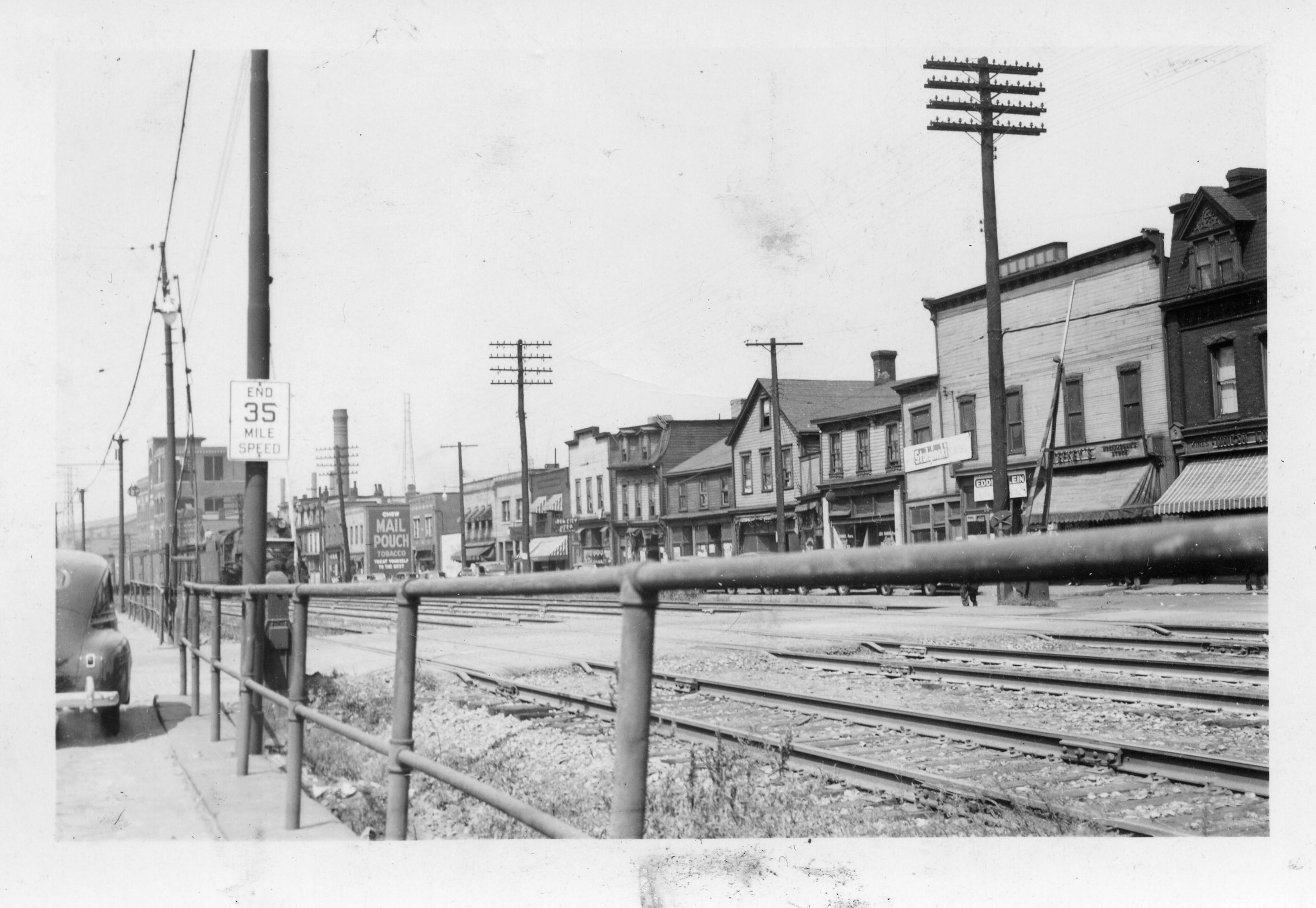
In his July 28, 2011 blog post, Duquesne Hunky, Jim Volk lists 186 businesses printed in a 1940 City Directory published by the Duquesne Police Pension Fund (compliments of Jim Hartman of the Mifflin Township Historical Society). Twenty addresses in this publication specified Duquesne businesses located below the tracks. A front page article in the July 18, 1941 issue of the Duquesne Times identified 56 businesses that were “forced to seek new locations when buildings on the site of the Duquesne Steel Works expansion program [were] razed.” The article quotes a survey made by Health Officer Francis P. Long identifying the following businesses below the tracks:
11 Confectionery Stores 1 Bakery Shop
11 Beer Gardens 1 Plumbing Shop
6 Meat and Grocery Stores 1 Junk Yard
5 Chartered Clubs 1 Railroad Office
3 Tailor Shops 1 Shoe Repair Shop
2 Pool Rooms 1 Department Store
3 Restaurants 1 Building Supply Firm
4 Barber Shops 1 Church
1 Public Dance Hall 1 Garage and Repair Shop
1 Funeral Home
At least two Croatian entrepreneurs were among those proprietors who transferred their businesses to Carnegie-Illinois Steel Corporation in September 1941 (Duquesne Times, September 19, 1941, p. 2):
Mike Novosel transferred his business property located on the corner of Milford and River Avenue for a consideration of $14,000. According to a 1925 map provided by the Mifflin Township Historical Society, the address at this location would have been 100 Milford Avenue. This corresponds to the 1940 business directory as the National Beer Garden and Lunch Room with Mike Novosel as proprietor.
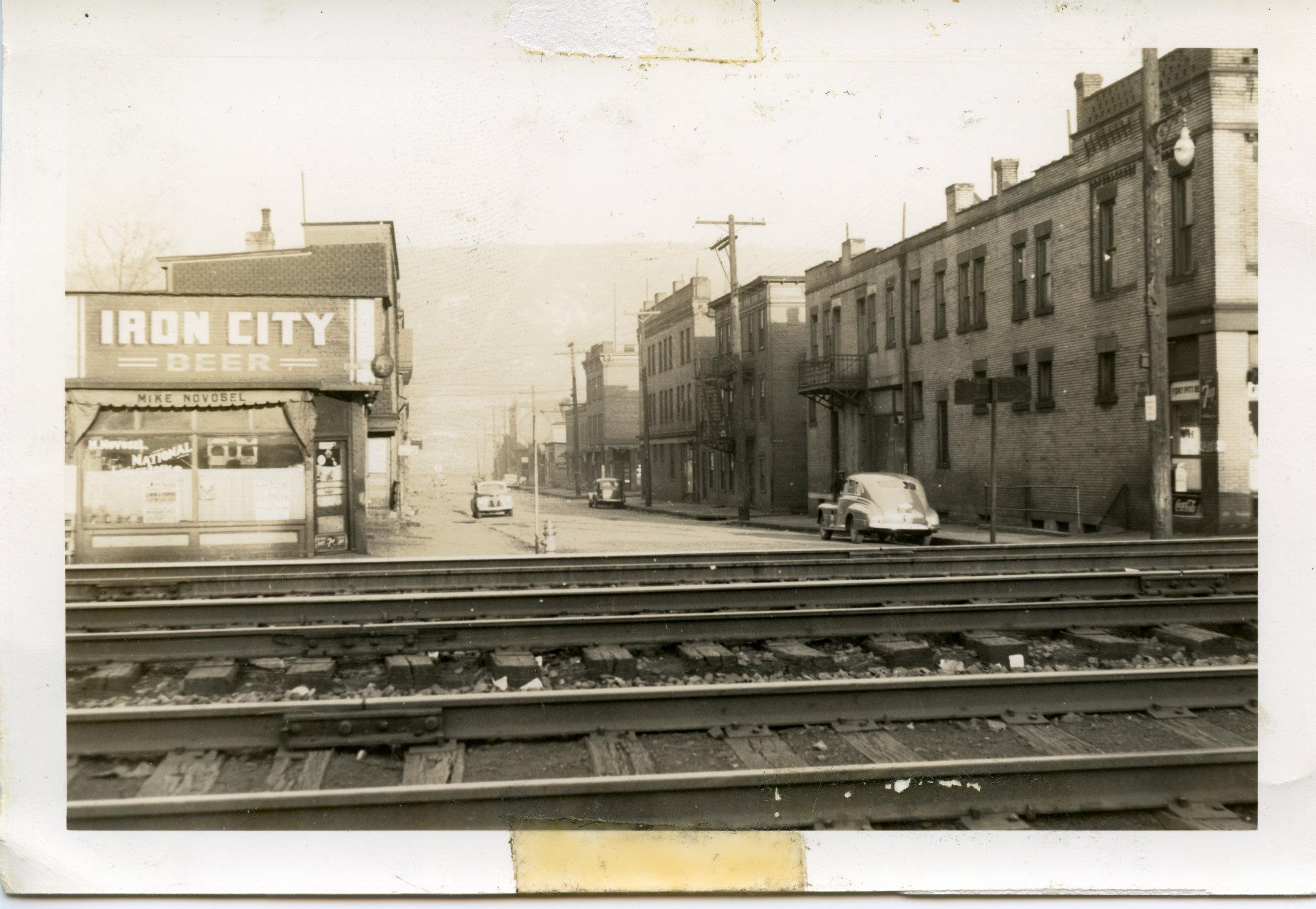
to the left is a 1941 photograph of the National Beer Garden and Lunch Room which also shows Novosel’s name on the building. The camera points east along River Avenue. According to 1930 and 1940 United States Census records, Novosel, with wife Anna and children, lived two doors down in property he owned at 5 River Avenue.
Apparently the Novosels owned property next door at 7 River Avenue as well. My grandparents, Anthony and Catherine Salopek, rented this space from the Novosels for nearly five years. My father, John Anthony Salopek, was born at 7 River Avenue in January of 1932. He lived with his parents and sister on the ground level in a store front, and his parents rented out the upstairs rooms to boarders. John remembers getting hair cuts from Mr. Novosel who had been employed many years as a proprietor of a barber shop in Duquense.
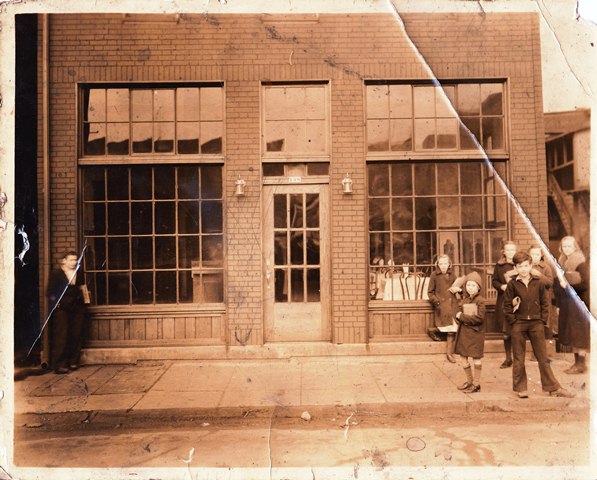
Ivan (John) Vojvoda transferred his business property at 108 Milford also for a consideration of $14,000. The Milford Beer Garden would have been just a bit farther to the north of Novosel’s business. Both Ivan Vojvoda and his wife Sylvia were naturalized Croatian immigrants. Incidentally they lived at 5 North River Avenue in 1923 prior to the Novosels living there. In the 1920s Vojvoda was a pool room proprietor before purchasing 108 Milford Avenue from Vaso Ikach sometime in the early 1930s and opening the Milford Beer Garden restaurant.
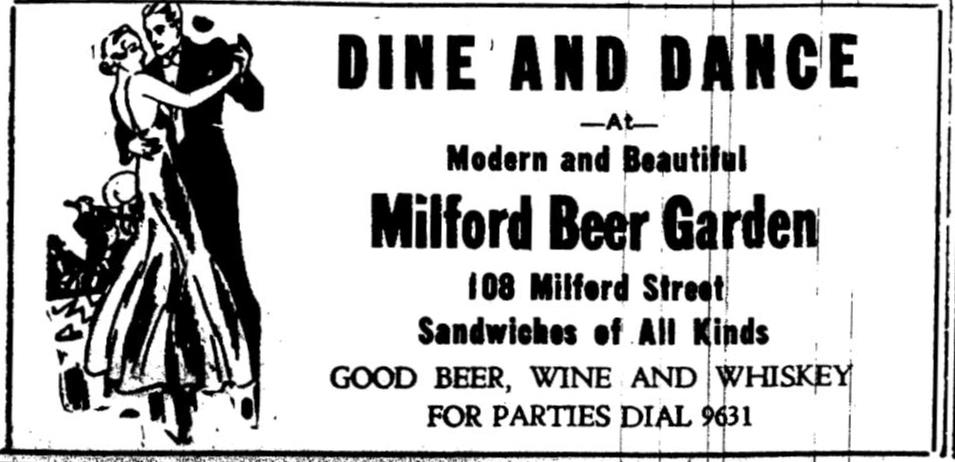
The Milford Beer Garden advertised “good beer, wine, whiskey — and sandwiches of all kinds!” The “modern and beautiful” Milford Beer Garden was open for dancing every Saturday and payday nites!

I remember visiting Kum Ivan Vojvoda when I was a young girl. By that time he was no longer living in Duquesne, and his daughter Katie was caring for him. I recall that she had candy dishes full of the most lovely hard tack candies – those candies were so beautiful in the shapes of ribbons and fancy designs. It tasted good too; they just don’t make that kind of candy anymore.
I guess special candy is what a kid could expect from an important person. The May 28, 1927 issue of the Duquesne Times (p. 7) indicates that Ivan Vojvoda received an invitation to attend the coronation of King George the sixth. At that time period, Ivan would have been running his pool hall rather than Milford Gardens. According to the news article, “although he could not attend, Mr. Vojvoda was plenty happy and so proud of the distinction that he placed the invitation in a frame and it now adorns a nice spot on the wall where his patrons can believe what they see”.

If seeing is believing, then perhaps it may be difficult to believe there ever was a neighborhood below the tracks of Duquesne. The people living there have long gone, streets have ceased to exist, and buildings no longer stand to remind us of life past. Nevertheless, old photographs, maps, newspapers and documents remain to reveal the almost forgotten history and legacy that was forged along the Monongahela by the immigrants living below the tracks.
(c) 2013 to present Patricia J. Angus
June 2014 — “Where’s Waldo In Duquesne?” posted by the Duquesne Hunky. Marvelous panoramic photo of Duquesne taken in 1938 which included all of the neighborhood below the tracks!
ONLINE MAPS of Old DUQUESNE, showing the streets below the tracks:
New Added September 2016 — Penn State University Libraries Digital Collections: Maps of Duquesne, Allegheny County, Pennsylvania
Darling Digital Library Maps. Duquesne, Allegheny County, Pennsylvania


Leave a Reply